
Christopher Richmond
works exhibitions news about
outside help
April 11 - May 16, 2026
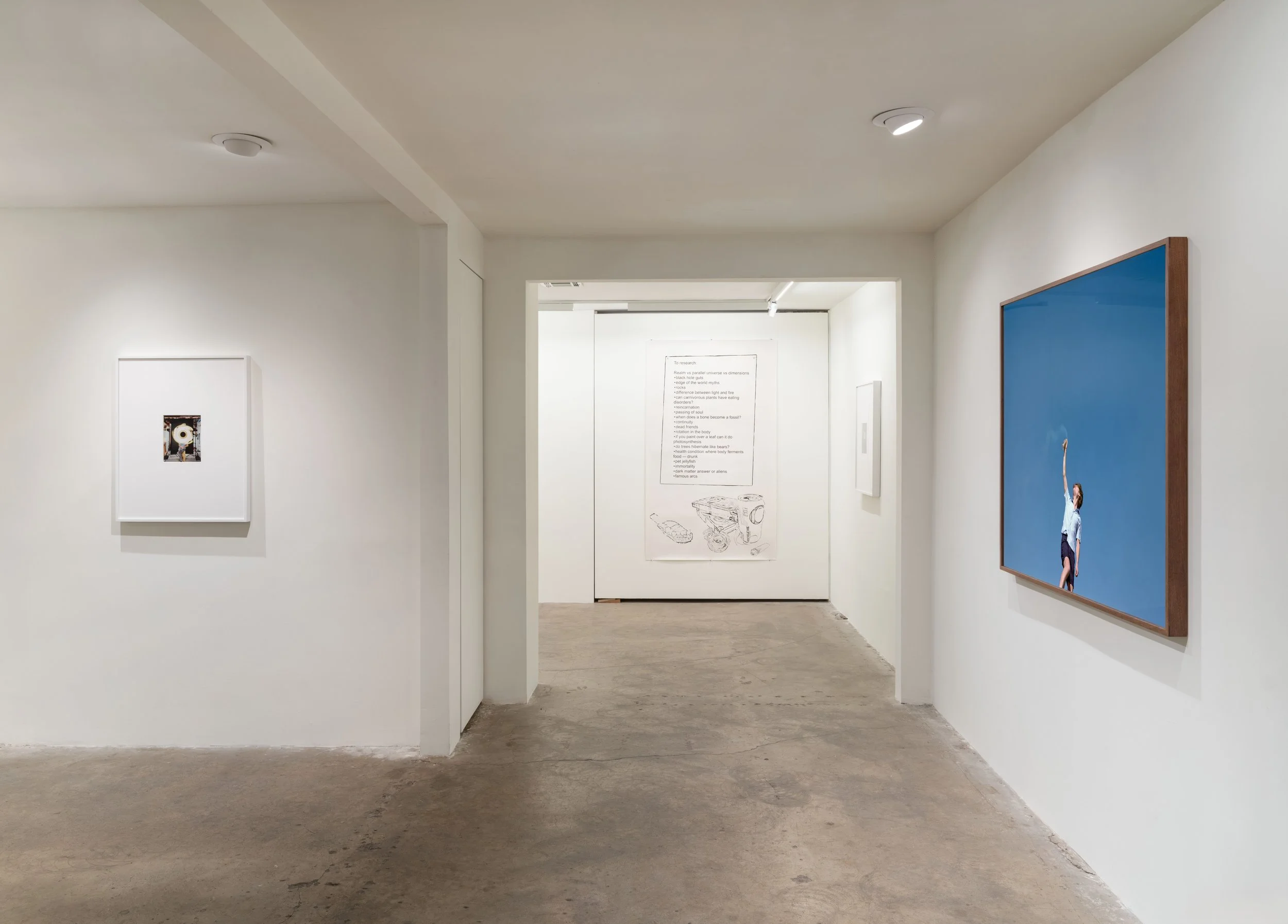
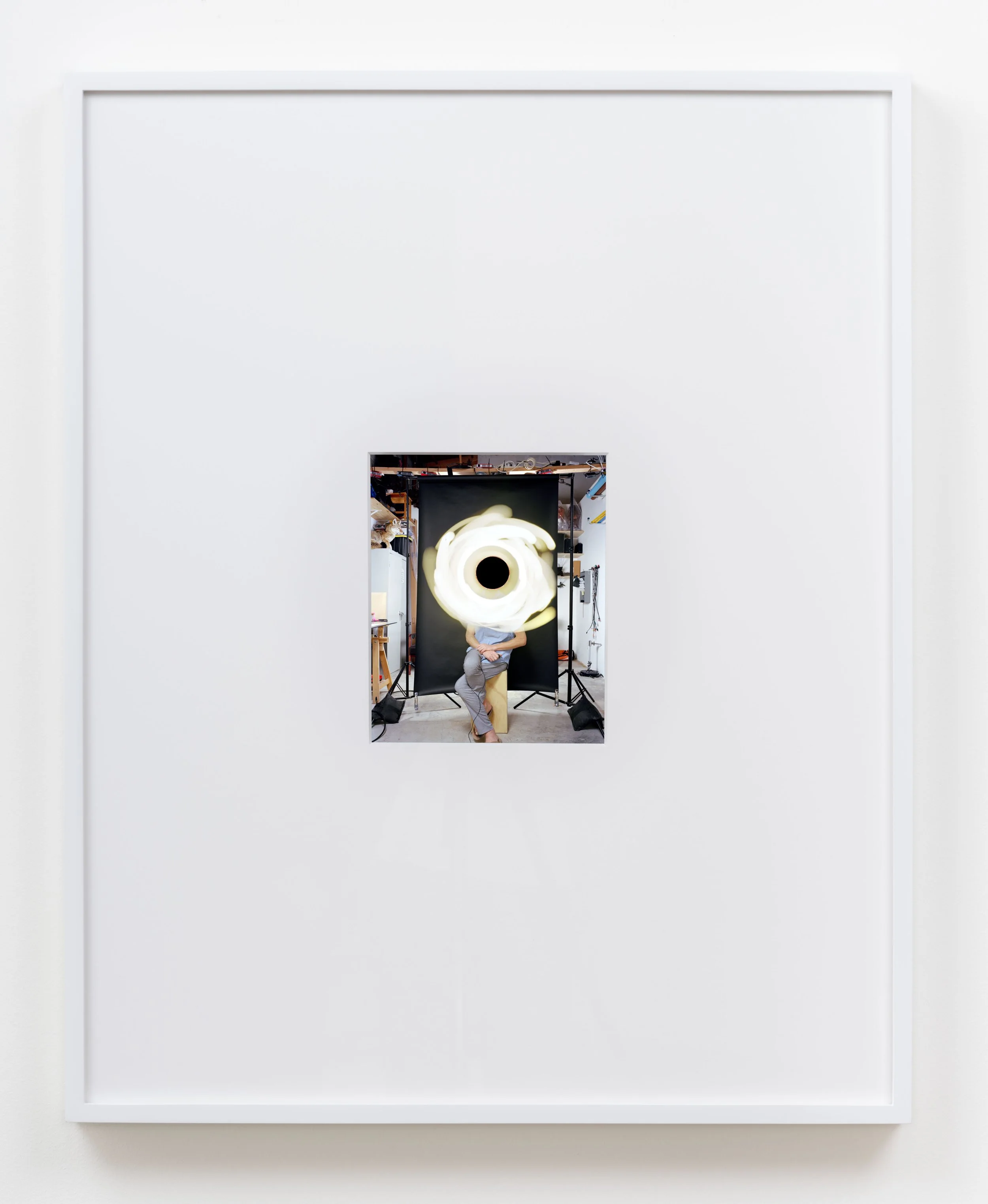
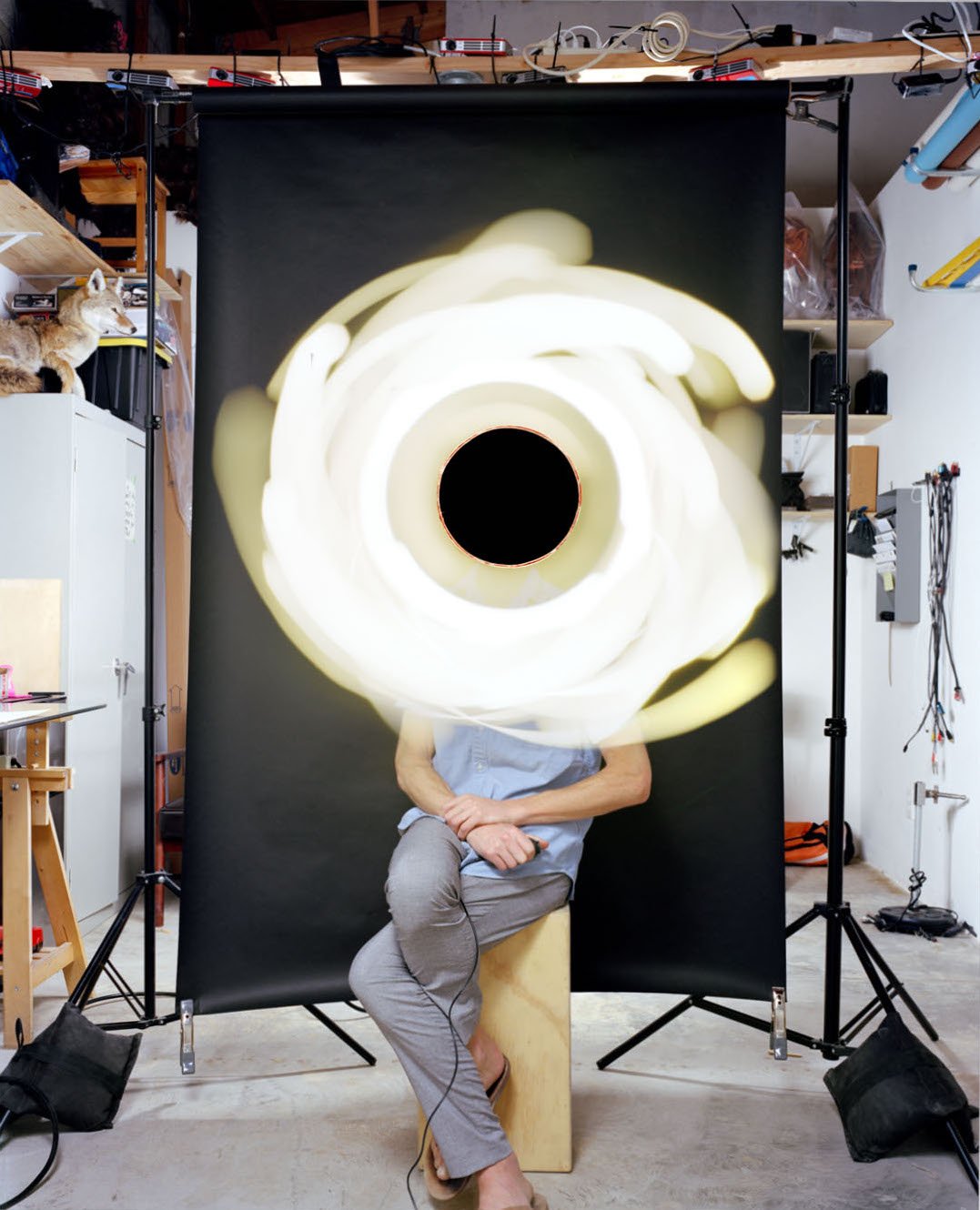
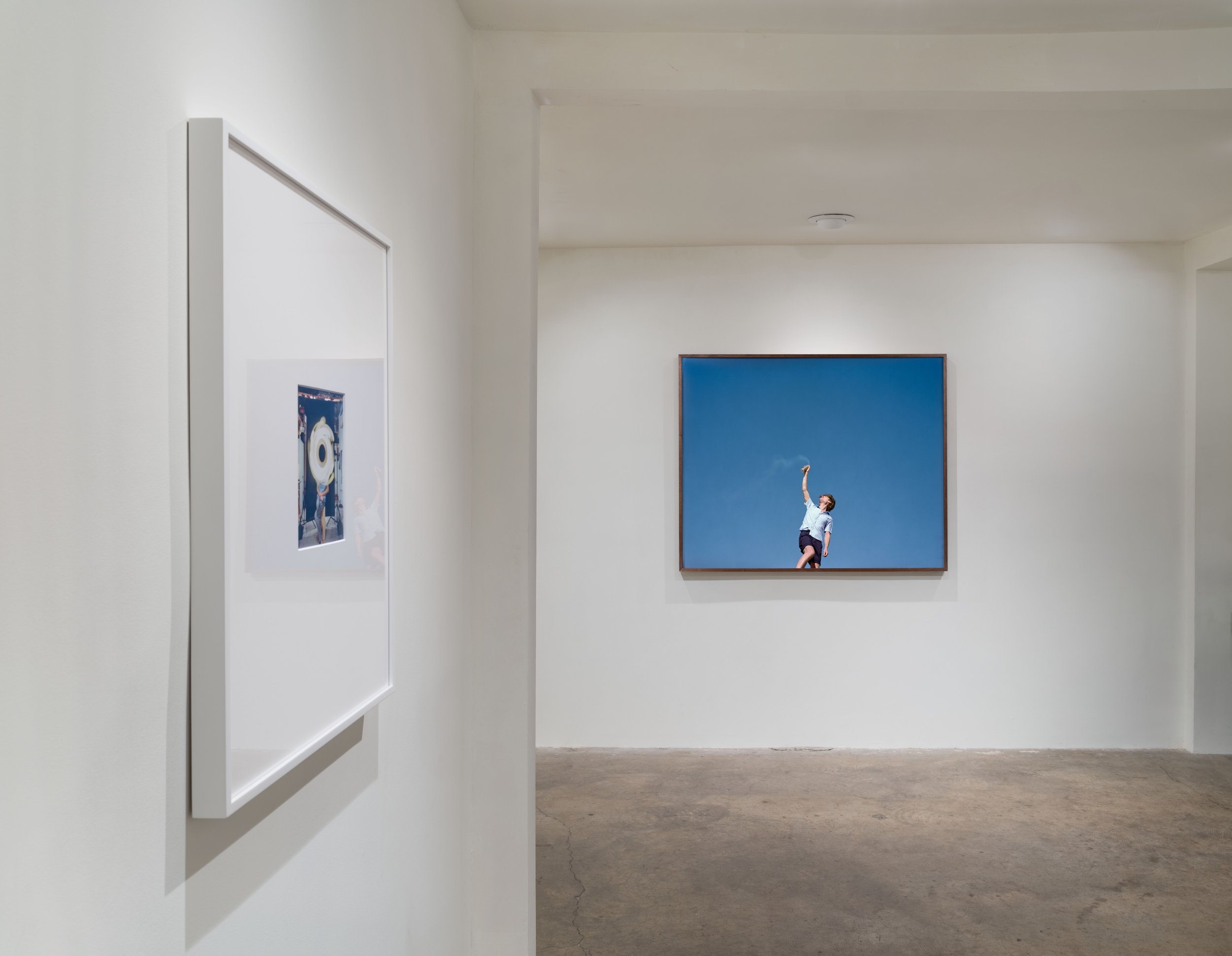
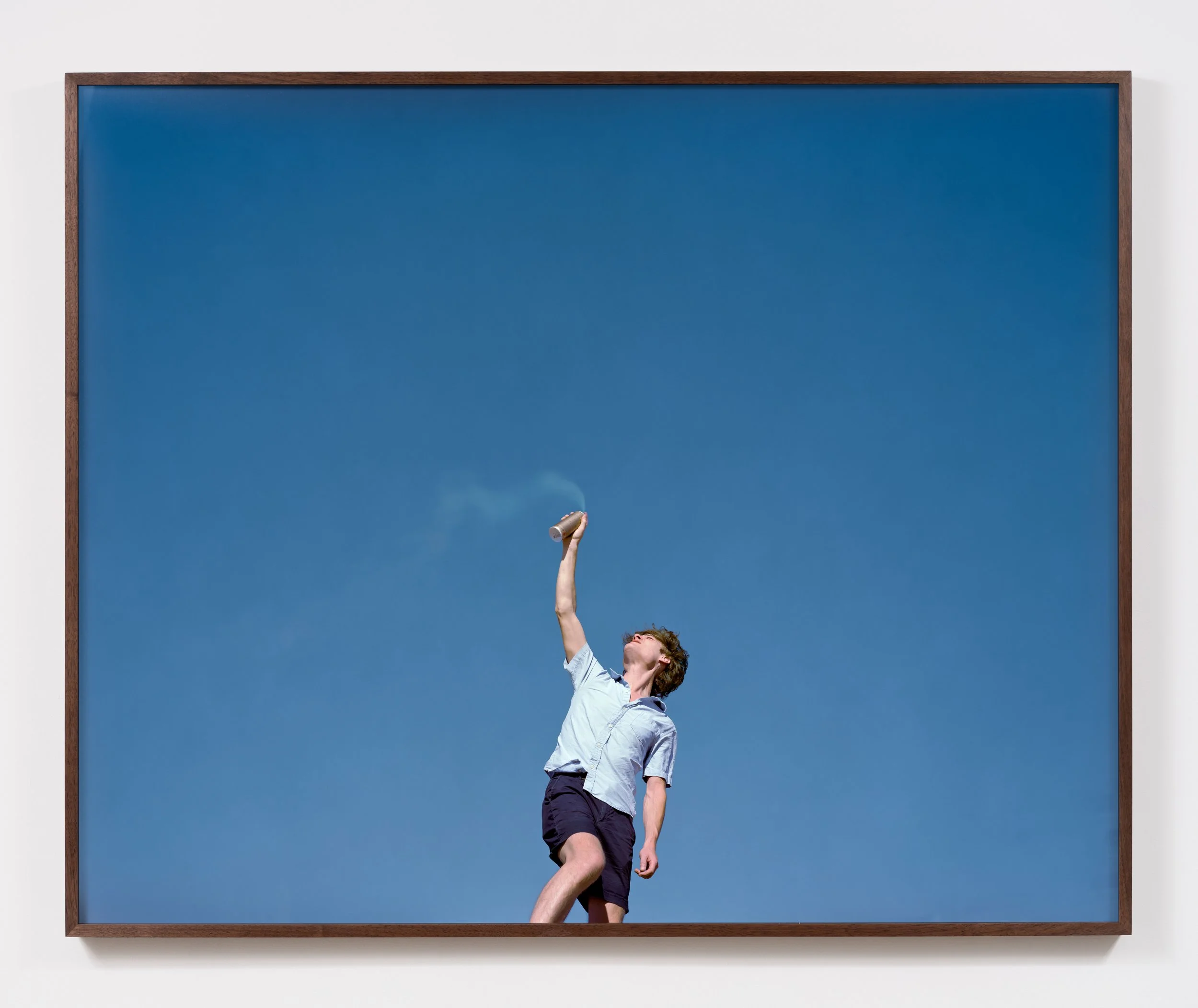
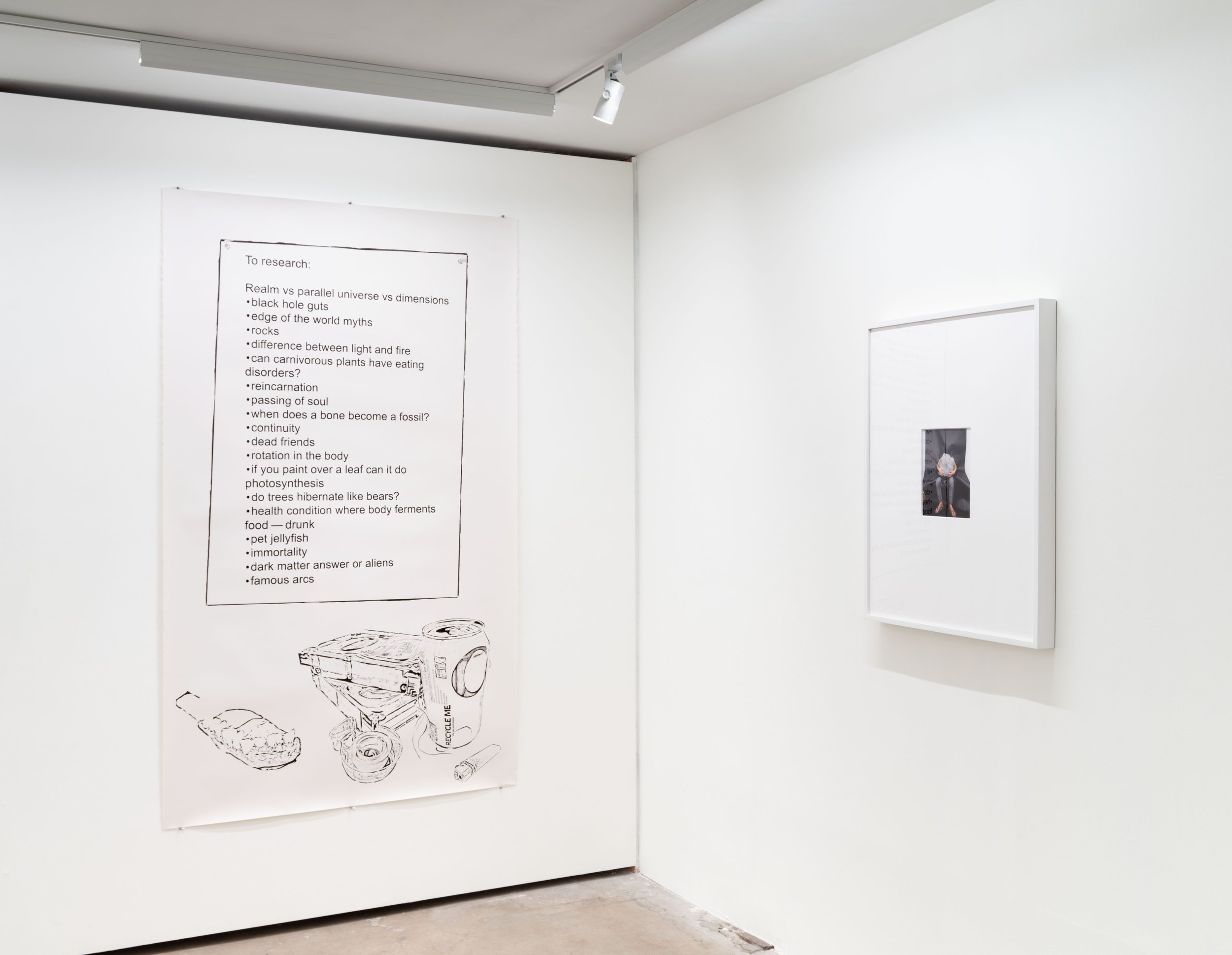
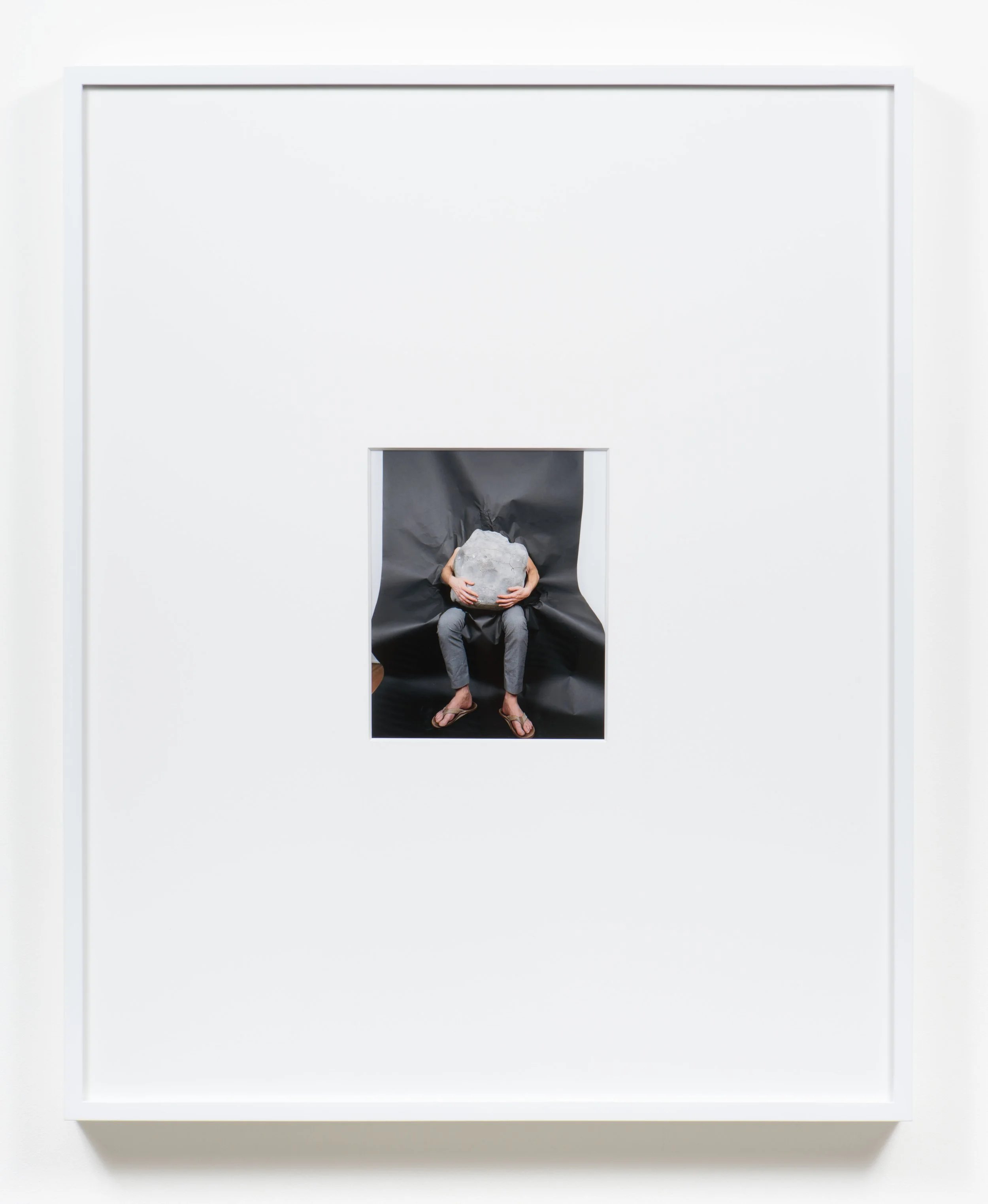
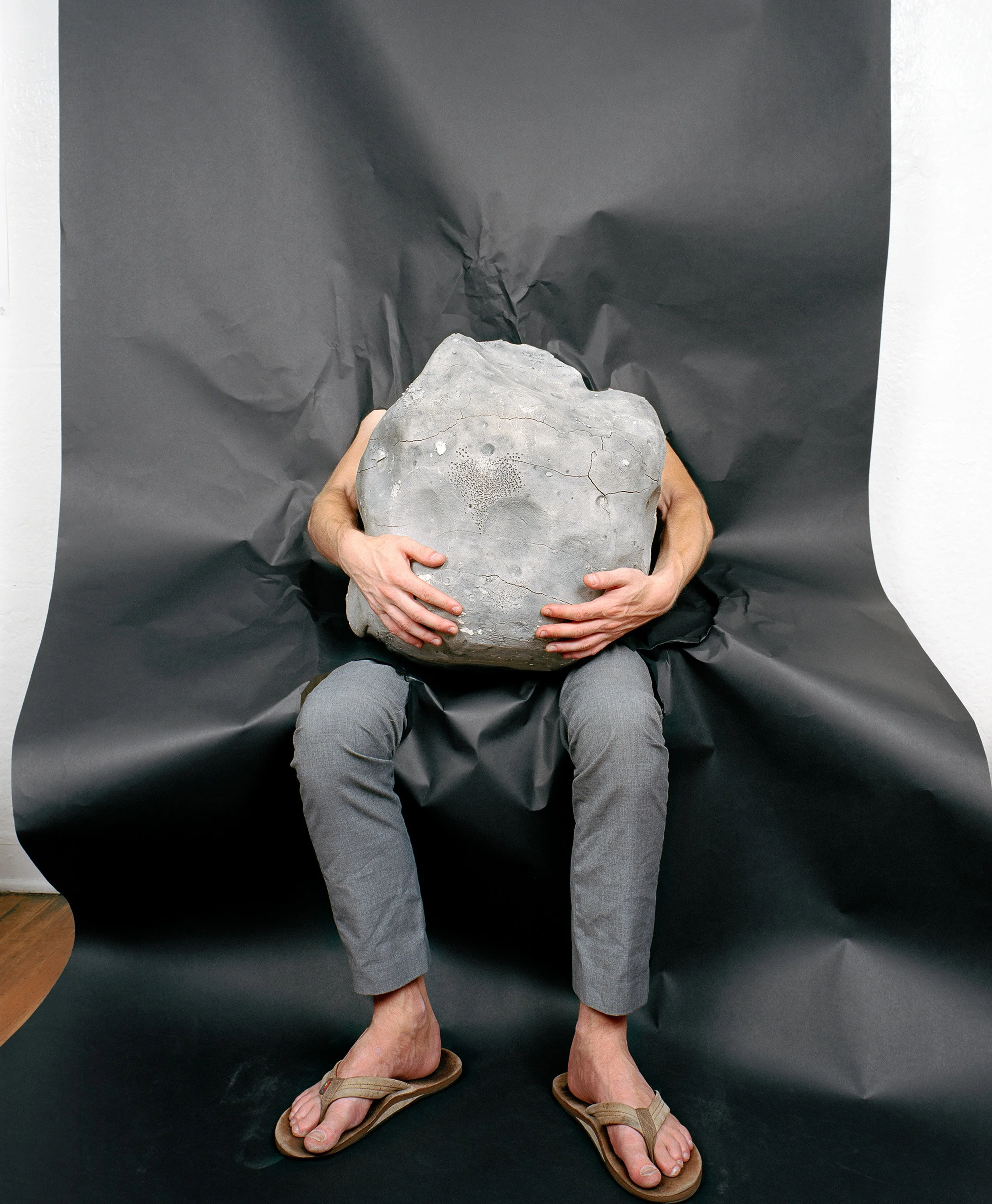
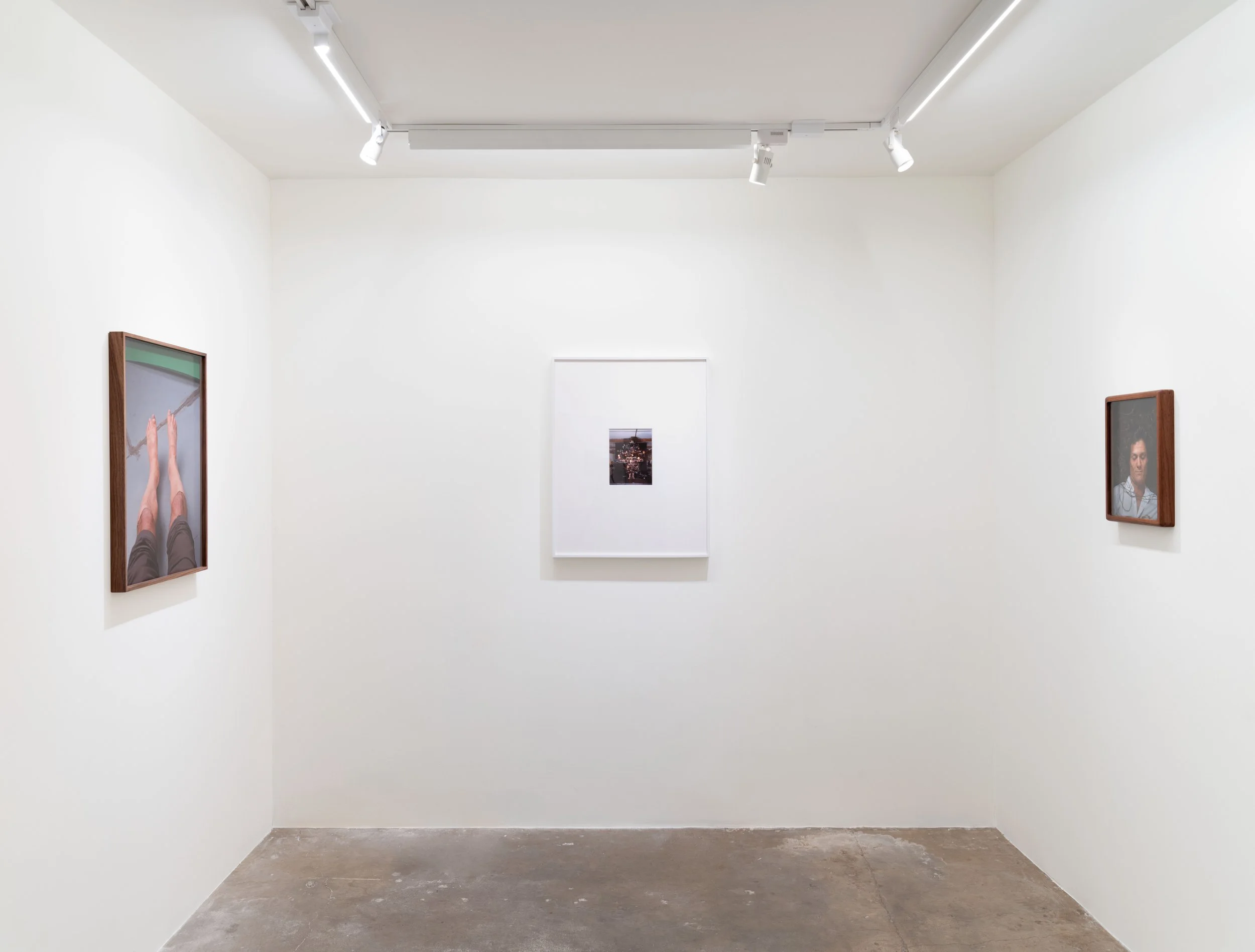
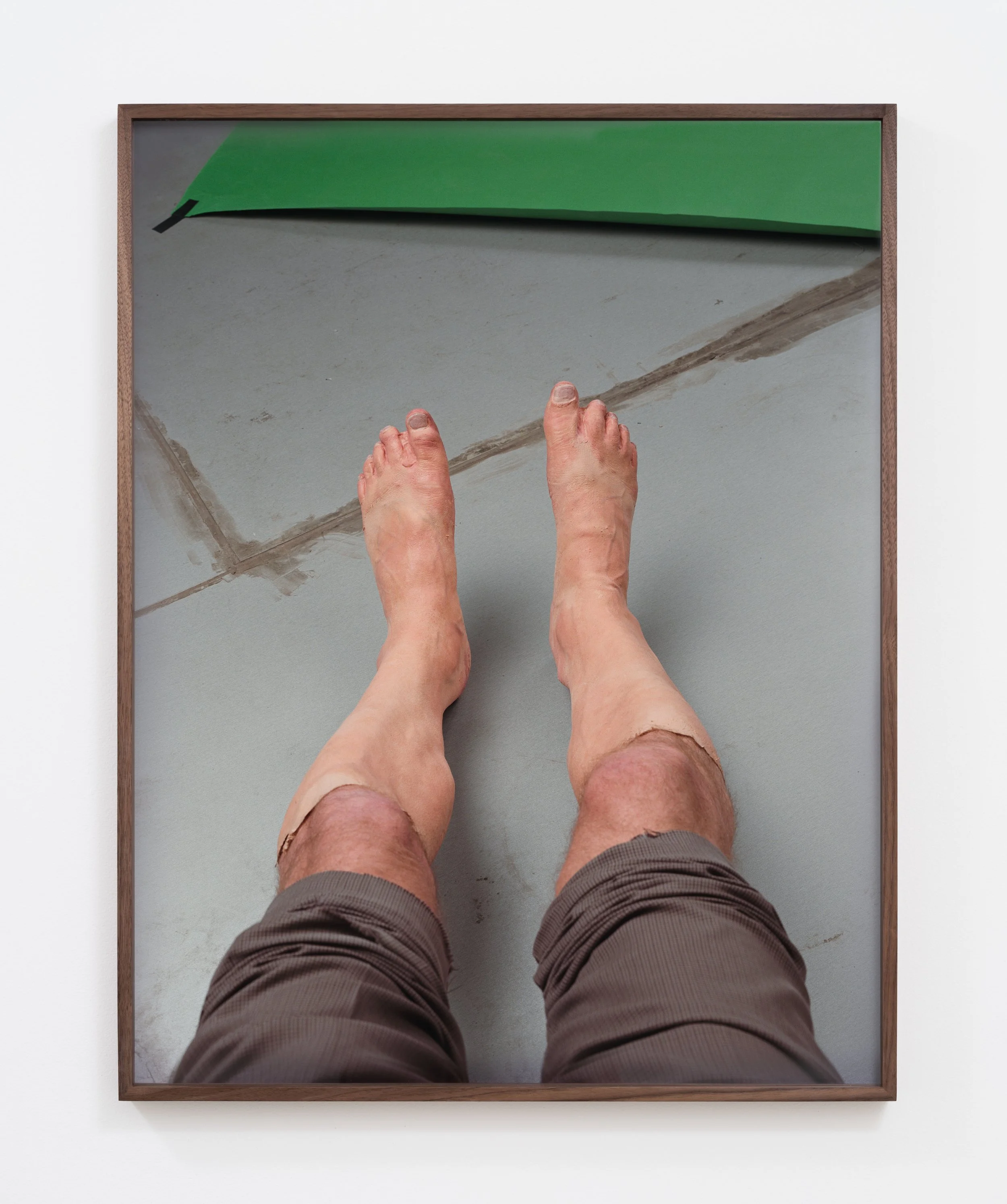
The artist has chosen to bunch up his pants. He hitches his trousers above the knee and stares down at his feet. The fake feet, worn over the real feet, are thin skins of silicone with indistinct toes, a trick of “movie magic.” He sees the feet as props for a film that will never exist. The artist, in his handling of illusion, calls this a self-portrait. The artist attempts to paint the sky blue with a can of aerosol spray paint called “Sky Blue.” This, too, he calls a self-portrait. The artist prefers his face obscured. The artist hides behind a large sheet of black paper, holding a ceramic asteroid on his lap.
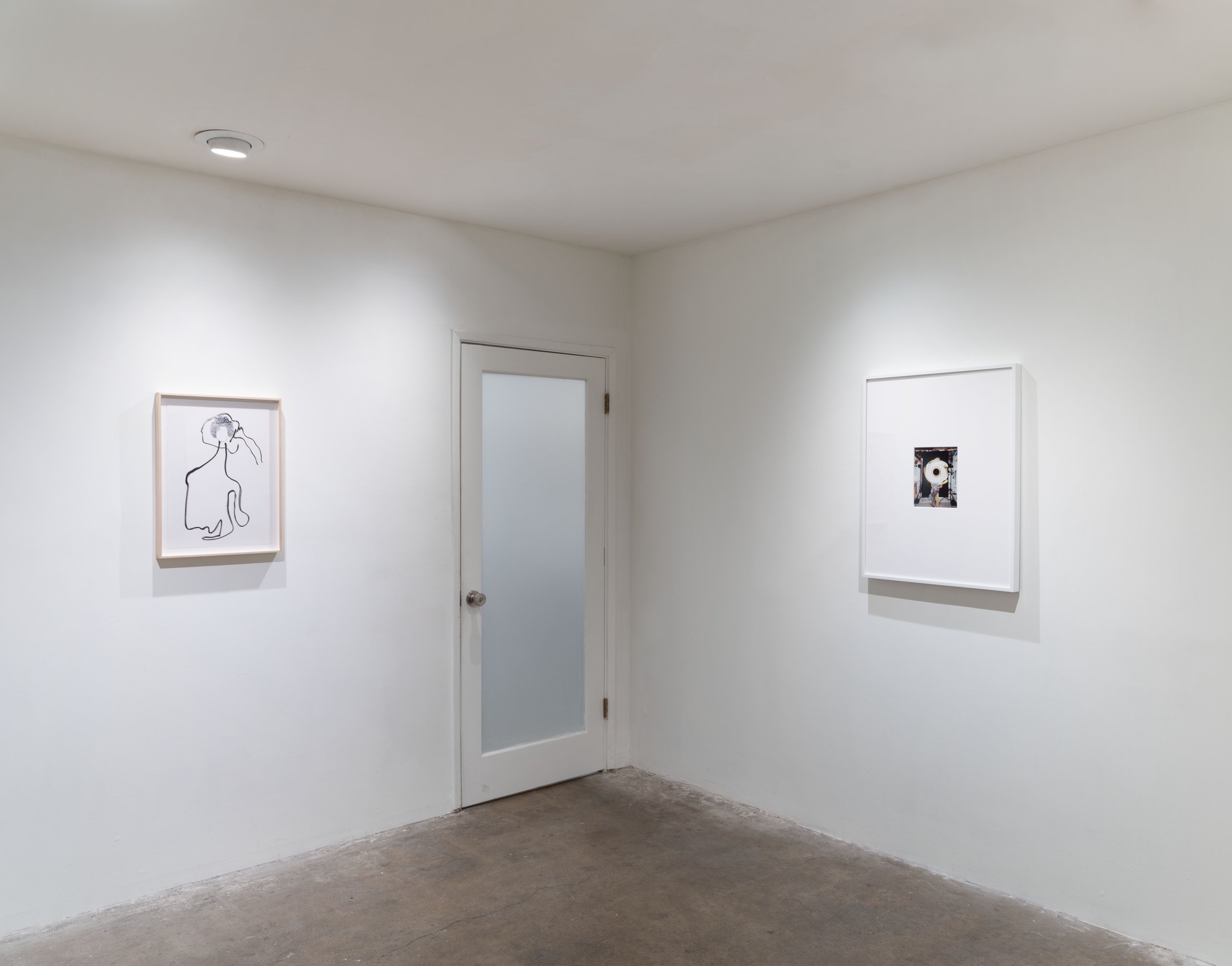
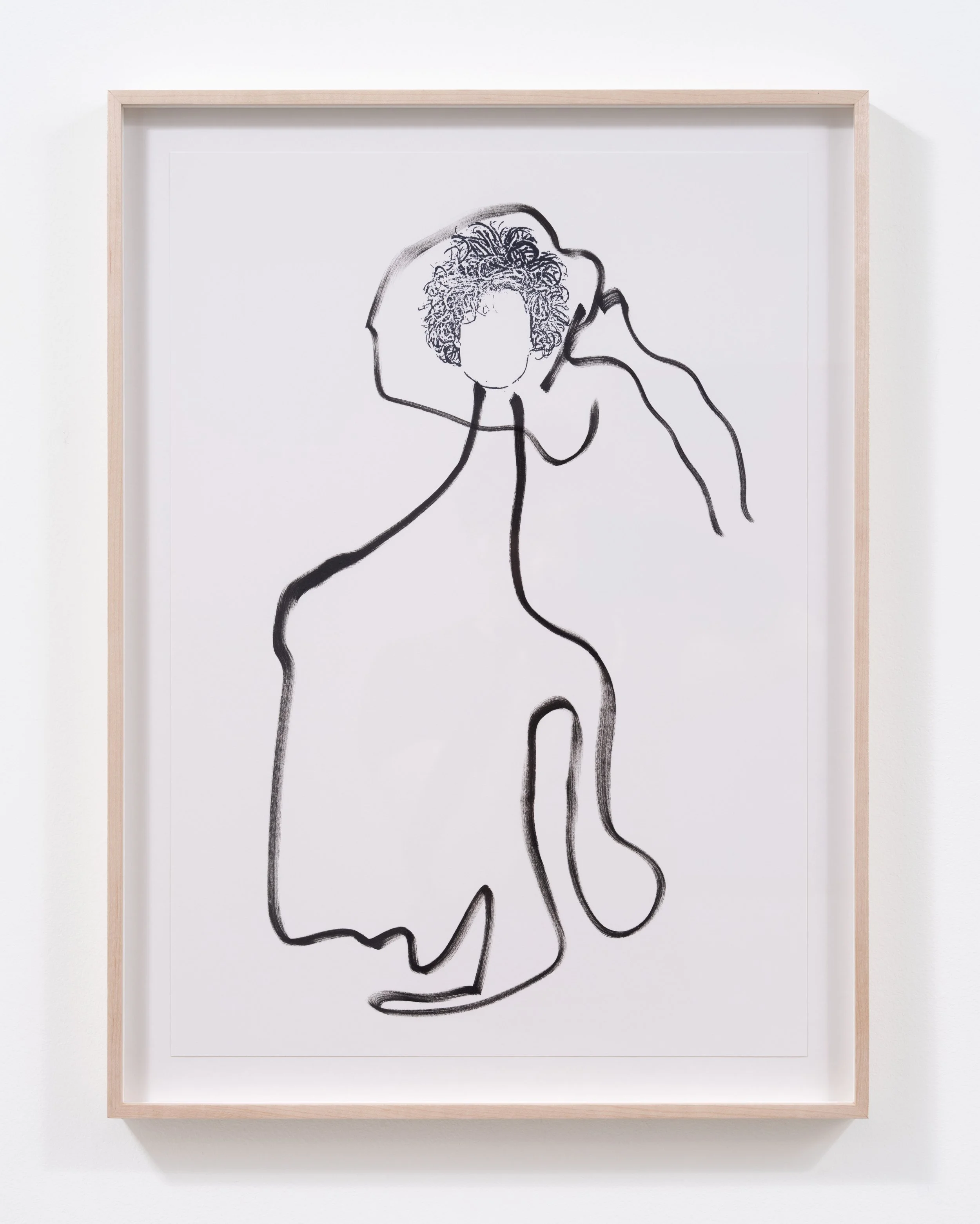
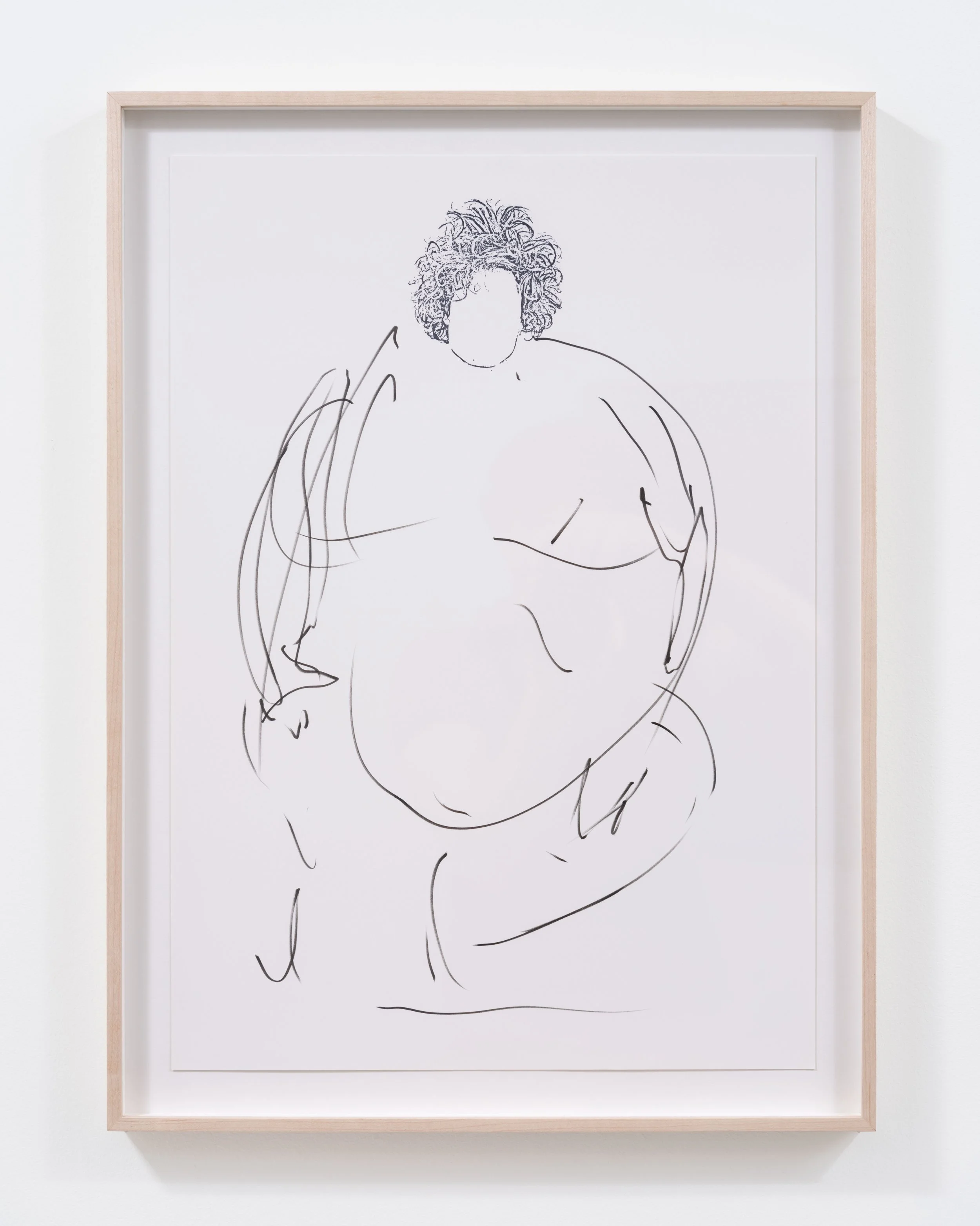
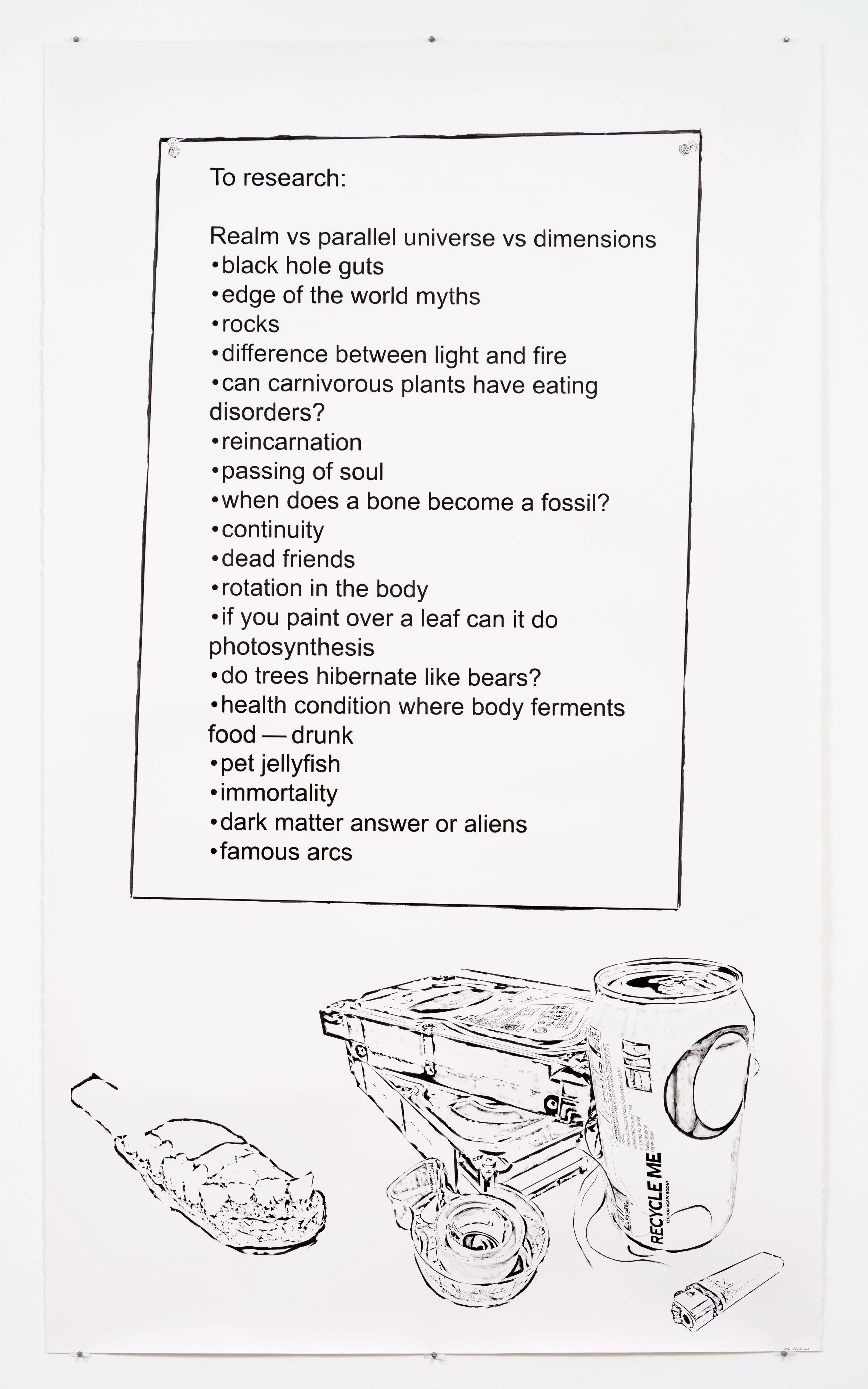
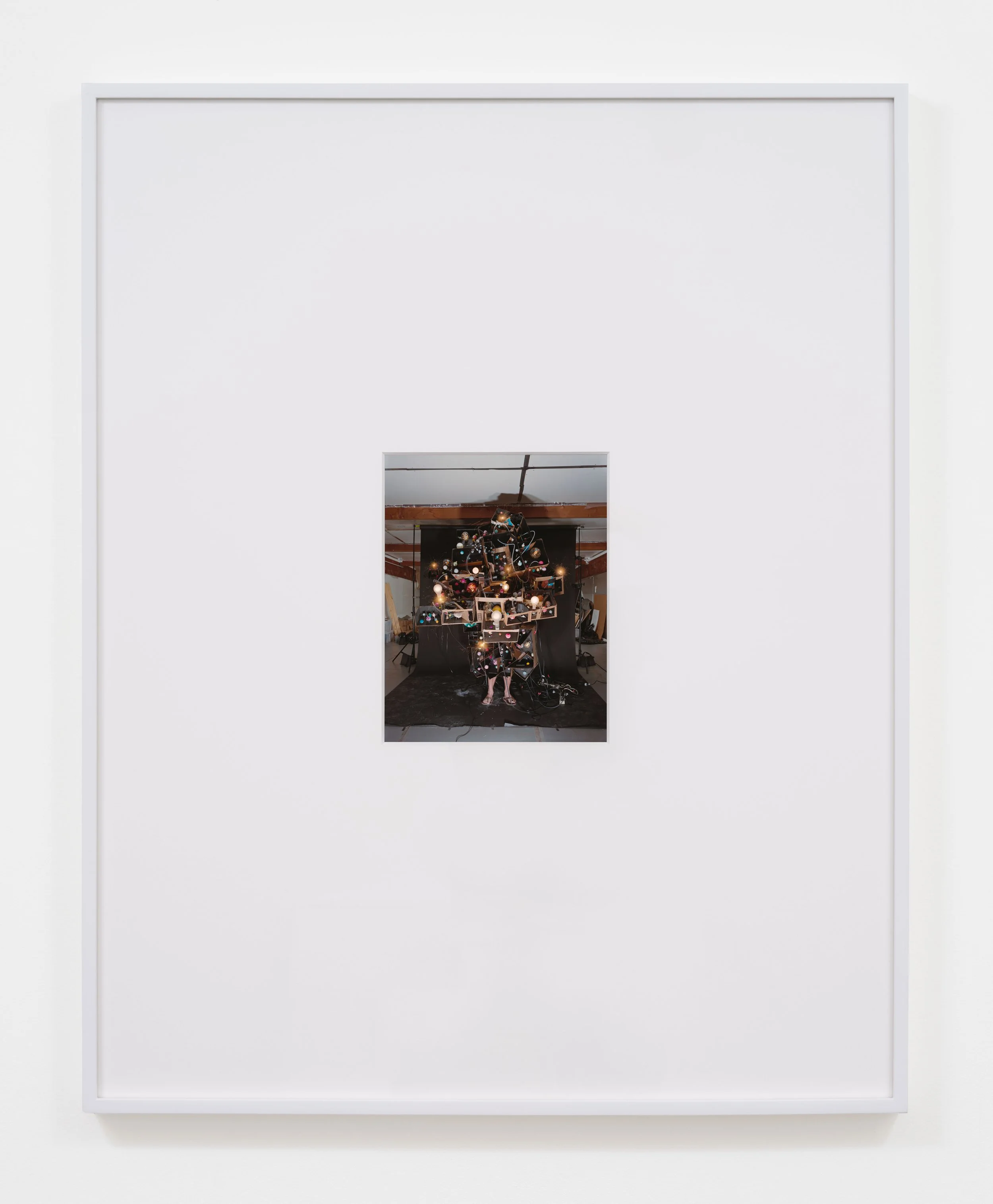
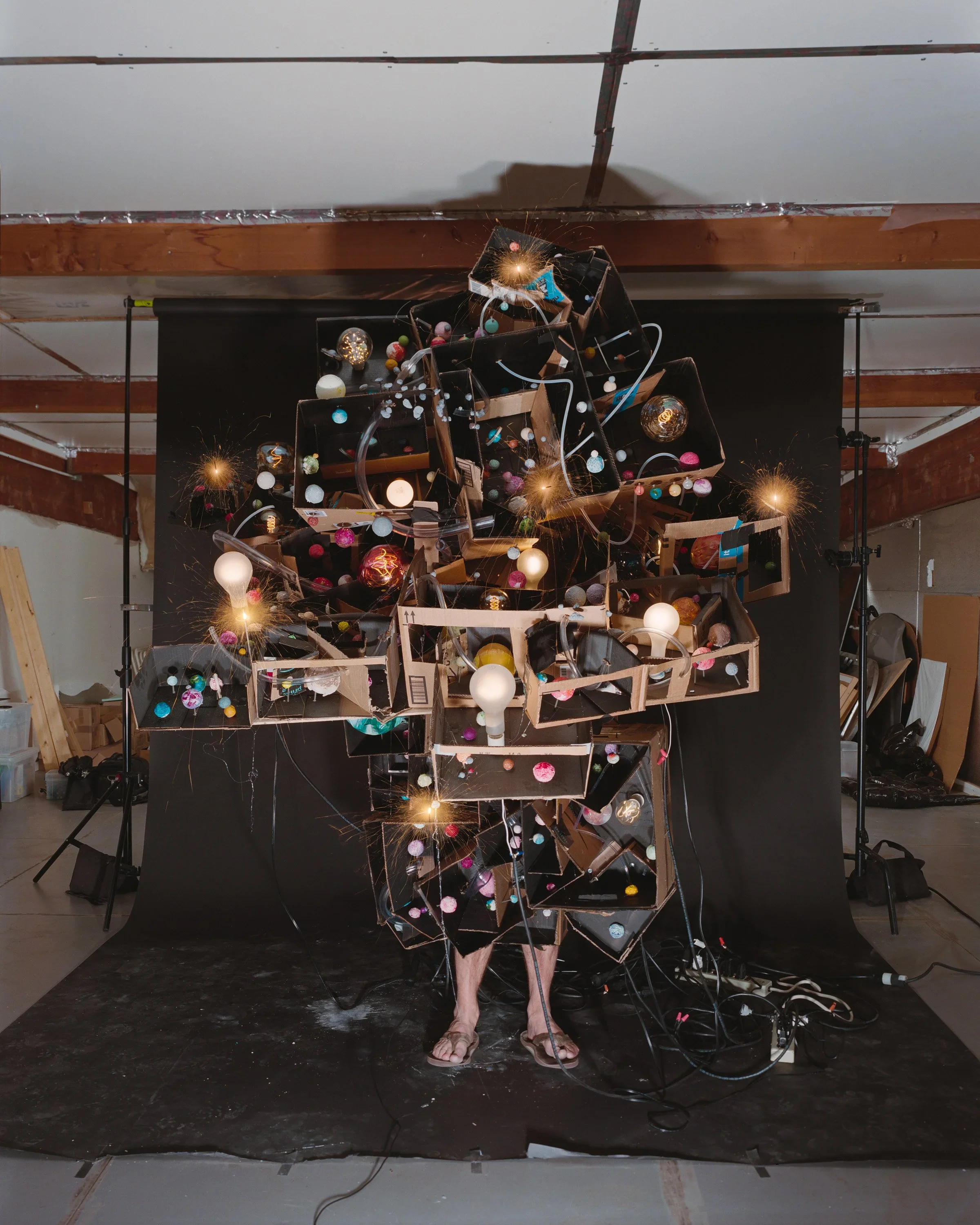
For a long time, the artist saw his body as a site of insoluble chaos. In a series of drawings, this feeling is translated as a loose eddy of lines that change shape each day. Then the artist, in his need for a greater degree of mediation than the pen could provide, creates a four-inch rubber stamp of his head. The blank face, surrounded by a show of curls, is called a self-portrait. Though the artist declines to depict the face, he instead draws flip-flops, hard drives, and cans of Diet Coke. The artist, despite his professed enthusiasm for the celestial, keeps returning to earthly debris. If the “artist’s hand” is a noble body part whose ambition stretches sublimely upward—Michelangelo’s yearning finger—the artist presents only the feet, hopelessly terrestrial. The artist likes control but can’t resist a cosmic joke. He prints a list of topics to research such as black hole guts, dead friends, reincarnation and famous arcs—yet another self-portrait.
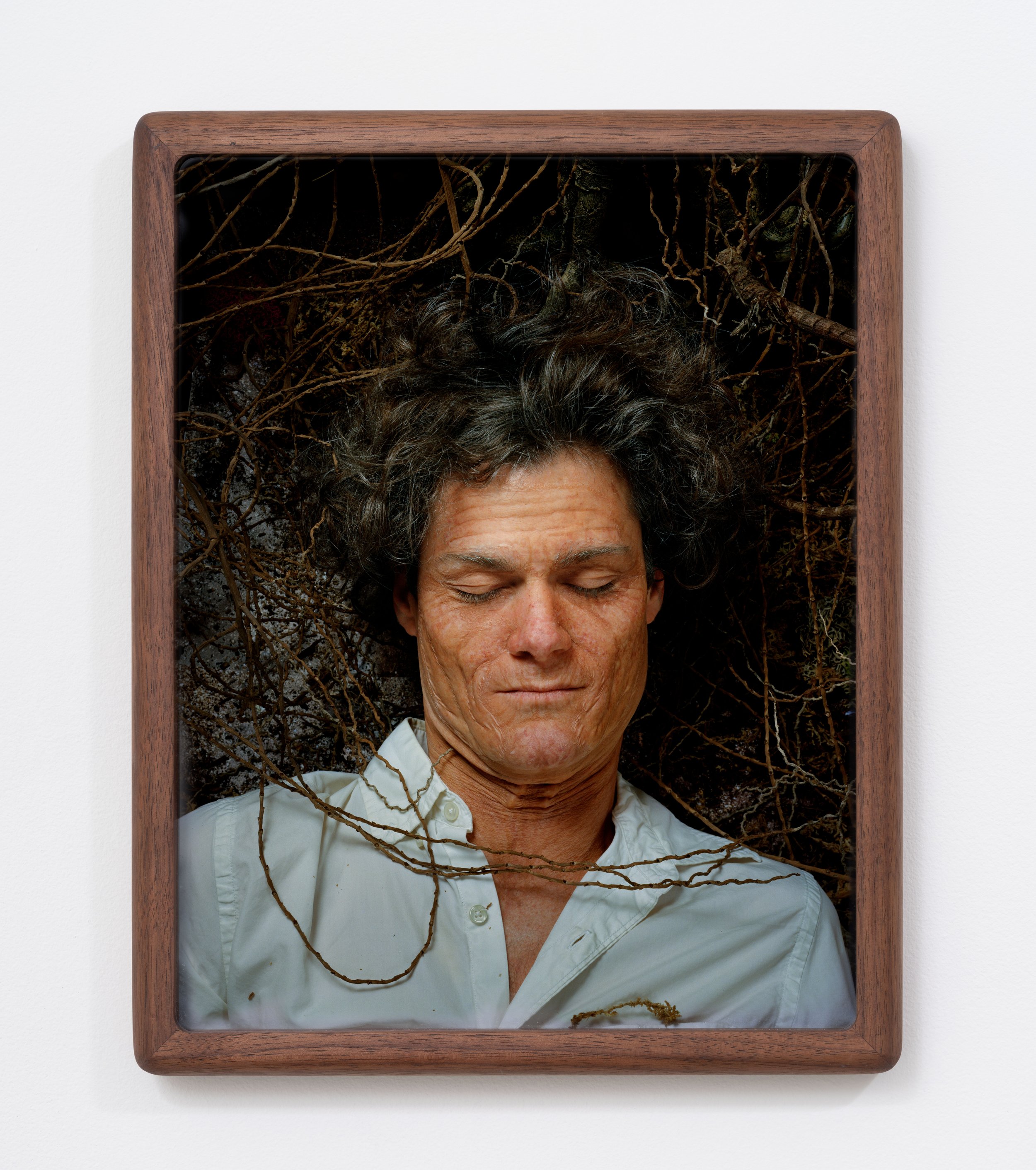
The world, in the artist’s eyes, is nothing if not a strange storage container, holding the endless gap between desire and the sad fact of our materials. The artist pretends to be dead but because he is not dead, must find someone to make rubber molds of his face to engineer artificial wrinkles as evidence of a long life he has not lived, but hopes to live and then, in time, lose. This too is “movie magic.” Because the artist has no yard in Los Angeles, he must photograph his face against photographs of dirt that resemble “real dirt.” The selection of self-portraits in which the body is hidden, staged, imitated, warped or otherwise weirdly arranged, the artist calls OUTSIDE HELP. The roots bordering his buried face are not those one would find growing deep below the surface, but instead are fallen heads from a palm picked up off real ground.
Text by Anya Ventura
Christopher Richmond (b. 1986, Solana Beach, CA) received an MFA from the University of Southern California (USC) and a BFA in Film and Media Arts from Chapman University. His works have been the subject of solo exhibitions at Fulcrum Press, Moskowitz Bayse, DXIX Projects in Los Angeles, and the Lundgren Gallery in Palma de Mallorca, Spain. His works have been included in group exhibitions in Los Angeles, New York, San Diego, Palma de Mallorca, Spain, and Vienna, Austria. His works have been included in screenings in Toronto, Canada and Los Angeles, and are in the permanent collection at the Los Angeles County Museum of Art, the Hammer Museum, and the Getty Research Institute. He lives and works in Los Angeles.